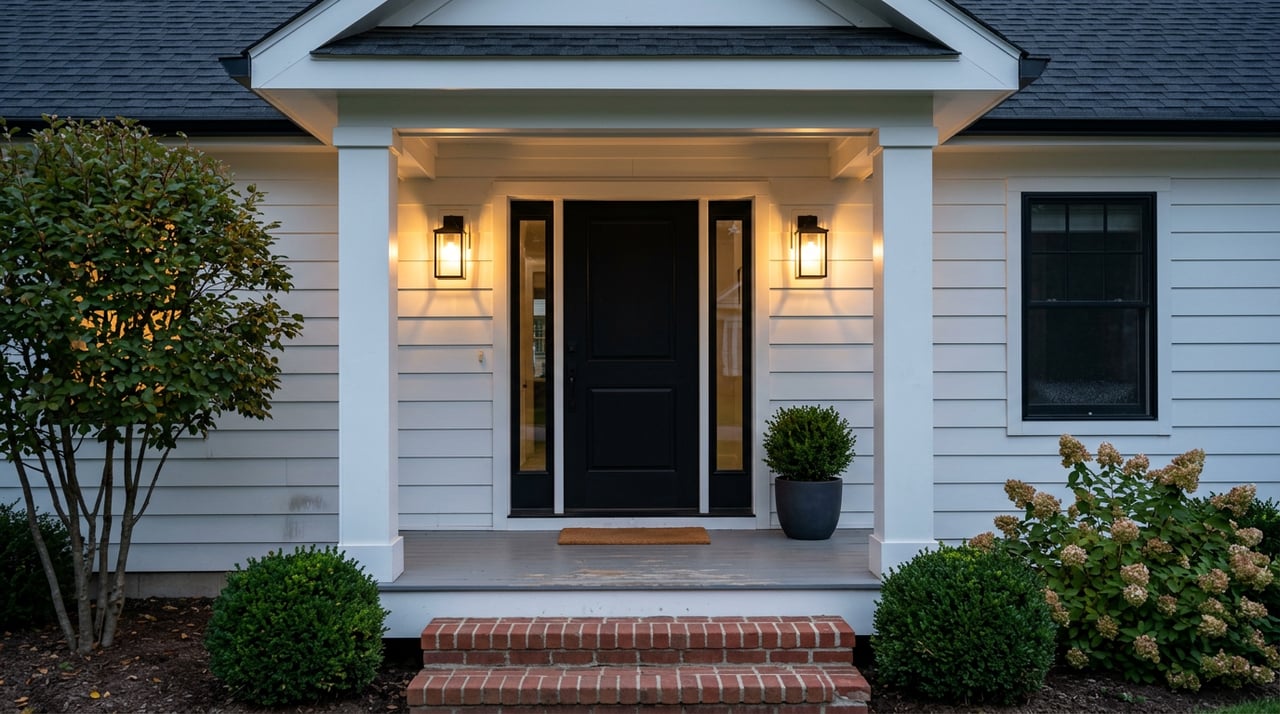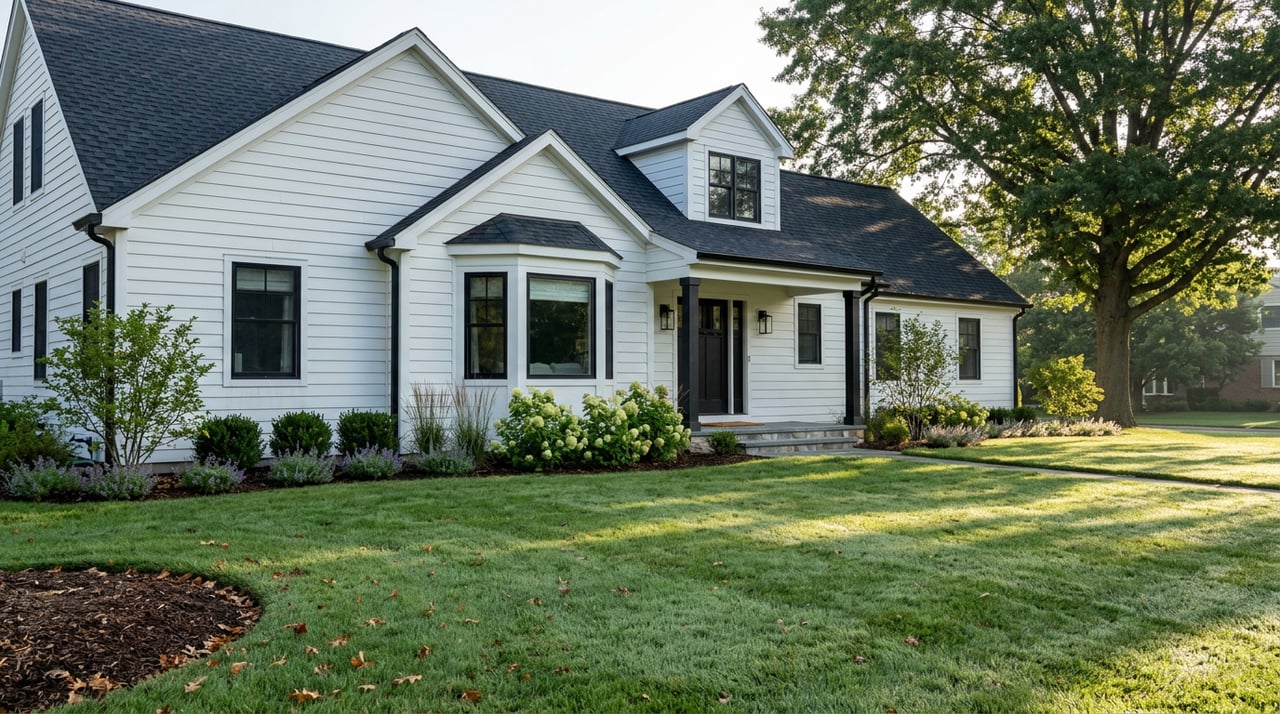
Two homes in the same Suffolk County town, same square footage, same asking price, same septic system doing exactly what it should. One seller has three years of pumping receipts from a licensed contractor sitting in a folder. The other has been just as careful about maintenance but never kept the paper. To a lender underwriting an FHA or VA loan, or to a buyer's attorney reviewing the file two weeks before closing, those two houses are not the same risk. A working system with no documentation behaves like a failing one the moment someone asks for proof.
That is the part of a Suffolk County sale that surprises people. Not a smell in the yard. Not a permit nobody pulled. The paperwork trail, or the lack of one, sitting quietly under a listing price that never mentions it.
The county's median sale price tells you what a house costs. It does not tell you what is underneath it, what it will cost to keep compliant, or whether the seller can produce what a lender is about to ask for.
The Tank Isn't the Problem. The File Is.
Most Suffolk County properties run on a private wastewater system rather than municipal sewer, and the county has required documentation of regular maintenance for transfers for years now. Buyers and their agents typically request pumping records, service dates, and any prior inspection reports as part of due diligence, and most Suffolk buyers will not close without a cesspool inspection even when it is not strictly required by law. FHA and VA loans carry their own septic standards, and if a system does not meet them, the loan does not move forward regardless of how much both sides want the deal to close.
Homeowners insurance rarely helps here either. Standard policies specifically exclude septic and cesspool failure, so a homeowner who assumes coverage kicks in if something goes wrong is usually assuming incorrectly. A pre-listing inspection runs a few hundred dollars and produces exactly the kind of documentation a lender wants to see, which is a small cost against the negotiating leverage lost when a buyer's inspector finds a system with no history behind it.
What Changed in 2019, and Again in 2021
The rules got stricter on purpose. Suffolk County banned cesspool-only replacements in 2019, closing a loophole that had let homeowners swap a failing cesspool for another cesspool. At the time, more than 250,000 cesspool-only systems were still operating countywide, and nitrogen levels in local groundwater ranked among the worst in the country, a direct threat to a region that depends on a sole-source aquifer for its drinking water. Since July 2021, new construction and major reconstruction projects have been required to install nitrogen-reducing Innovative and Alternative systems, known as I/A OWTS, instead of conventional septic.
The renovation trigger is the detail that catches buyers of older homes off guard.
Suffolk County defines a "major reconstruction" as any renovation where the cost exceeds 50 percent of the home's market value, a threshold that requires documentation from a licensed appraiser and design professional to confirm.
A buyer who plans to gut and rebuild an older Suffolk County house for less than that threshold can typically keep a conventional system. Cross it, and the county requires the nitrogen-reducing upgrade as part of the project, which changes the renovation budget by tens of thousands of dollars before a single cabinet gets installed.
Three Parts of the County, Three Different Bills
Suffolk's wastewater landscape changes as you move east, and that geography does more to explain cost variation than the listing price does. Western towns like Babylon, Islip, and Huntington carry dense neighborhoods with cesspools dating to the 1940s through 1960s. Central Suffolk, including Brookhaven, Smithtown, and Riverhead, mixes suburban development with larger rural lots running both cesspools and septic. The East End towns of Southampton, East Hampton, Southold, and Shelter Island have larger properties, heavier reliance on septic, and stronger nitrogen-reduction pressure tied to coastal waterways, plus a seasonal population that stresses systems hardest in summer.
| Area | System type | Conventional replacement | I/A OWTS before grants |
|---|---|---|---|
| Western towns (Babylon, Islip, Huntington) | Mostly older cesspools | $15,000 to $25,000 | $25,000 to $45,000 |
| Central Suffolk (Brookhaven, Smithtown, Riverhead) | Mixed cesspool and septic | $15,000 to $25,000 | $25,000 to $45,000 |
| East End (Montauk, Amagansett, Bridgehampton) | Larger septic systems, stronger nitrogen rules | Uncommon | $25,000 to $50,000+ |
Long Island's high water table adds another wrinkle. The national pumping recommendation is every four to five years. On Suffolk's shallow aquifer, every two to three years is closer to reality if a homeowner wants to avoid a maintenance call turning into a failed drain field.
The Grant Money Runs on Its Own Clock
Suffolk County's Septic Improvement Program has offered grant assistance for years, and the terms recently improved. In September 2025, Governor Kathy Hochul signed a bill raising the reimbursement rate for enhanced septic installations to 75 percent, or up to $25,000, up from the previous cap of 50 percent, or $10,000. Suffolk County also received $20 million in new state funding for its program, with funds available for water quality projects in 2026. County Executive Ed Romaine has made sewer upgrades a focal point of his first term, and the legislation passed the state Assembly and Senate unanimously.
That money is real, but it does not move at closing speed. Grant applications typically take five to seven months from the initial call to an approved installation. A seller trying to close in a normal timeframe usually cannot wait on the grant and installs conventionally instead. A buyer planning to apply after closing needs to budget for the homeowner's share up front and treat the grant as reimbursement, not a discount at the register.
A $408 Million Reason Some Areas Are Different
Some Suffolk neighborhoods are getting out of the septic business entirely. The Suffolk County Coastal Resiliency Initiative, a $408 million sewer expansion, is connecting close to 6,000 homes to municipal sewer and decommissioning their septic and cesspool systems in the process. The first phase, roughly 4,000 tanks, wrapped up in 2024, with the remaining work expected to finish this year. If a property sits inside one of these target areas, the math on whether to replace a system now or wait for sewer changes considerably, and it is worth confirming with the county's sewered areas mapping before assuming a private system is the property's permanent future.
Questions to Ask Before You Sign Anything
- Ask the seller for pumping and inspection records going back at least three years, from a licensed contractor.
- Confirm whether the buyer's loan product, particularly FHA or VA, carries specific septic standards the property needs to meet.
- Check whether the property falls inside a proposed sewer district or an active Coastal Resiliency Initiative area.
- If a major renovation is planned, get a rough value estimate early so you know whether the project crosses the 50 percent reconstruction threshold.
- If a system needs replacing and there's no urgency to close fast, ask a licensed installer whether the timeline supports a grant application before assuming conventional is the only option.
A Few Questions We Hear Often
Does homeowners insurance cover a failed septic or cesspool system in Suffolk County? Generally no. Standard homeowners policies exclude septic system failure, which is why documentation and regular maintenance matter more here than in most parts of the country.
Can I still install a cesspool as a replacement in Suffolk County? No. The county banned cesspool-only replacements in 2019. Replacements must be at least a conventional septic system, and new construction or major reconstruction requires a nitrogen-reducing I/A OWTS system.
How often does Suffolk County expect a system to be pumped? The national guideline is every four to five years, but Suffolk's high water table makes every two to three years the more realistic schedule for avoiding a serious failure.
In March 2026, Suffolk County's median single-family sale price reached $700,000. That number says nothing about what sits beneath the lawn, what it will cost to keep compliant, or whether the paperwork exists to prove it. If you are buying or selling anywhere in Suffolk County and want a clear read on what a specific property's wastewater history means for your timeline and your budget, Yadlynd Cherubin and The Legacy Team can walk the details with you before you write an offer or sign a listing agreement. Schedule a free consultation and get the full picture before it becomes a closing-table surprise.