Are you thinking about buying a duplex, triplex, or four-unit property in Suffolk County? It can be a smart way to build income, offset your housing costs, or grow a small investment portfolio, but this market has its own rules and realities. If you understand how rents, taxes, sewer charges, and local approvals work here, you can make far better decisions before you go under contract. Let’s dive in.
Why Suffolk small multifamily stands out
Suffolk County is still mostly a single-family, owner-occupied market. Census QuickFacts reports 583,777 housing units in 2025, with an 82.2% owner-occupied rate, which helps explain why smaller multifamily properties can feel limited in supply.
The county’s August 2025 Consolidated Plan adds more context. It says 85% of residential properties are 1-unit detached homes, while only 4% are 2-to-4-unit buildings, and just 15% of occupied housing units are rentals. For you as an investor or owner-occupant, that means small multifamily properties are a relatively small piece of the local housing stock.
That limited supply matters. It can create opportunity, but it also means you need to move carefully and underwrite each property based on its exact town, village, and unit setup.
What counts as small multifamily
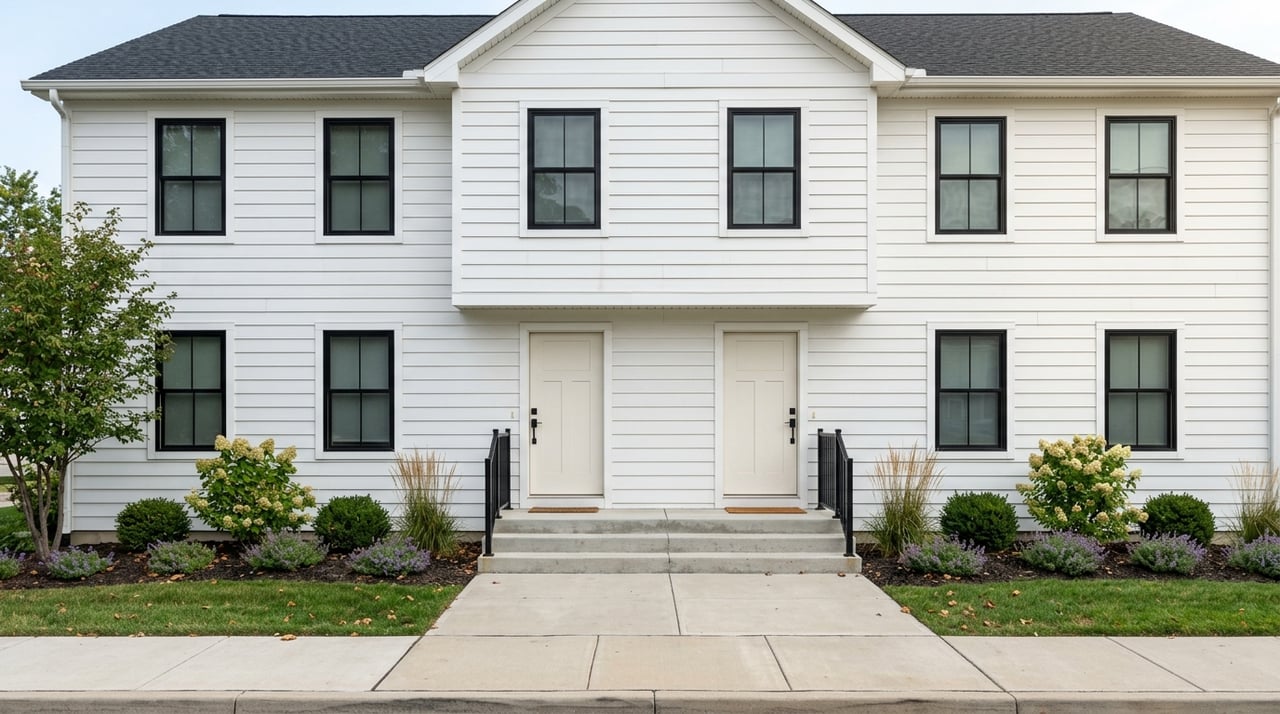
When most buyers talk about small multifamily, they usually mean duplexes, triplexes, and fourplexes. The Census framework groups these as 2-unit structures, 3- and 4-unit structures, and 5-or-more-unit structures.
For this conversation, the sweet spot is usually the 2-to-4-unit category. These properties often appeal to buyers who want rental income without taking on the scale and management demands of a larger building.
Why investors look at these properties
A small multifamily property can serve a few different goals. You might want a pure investment, or you may want to live in one unit and rent the others to help cover monthly costs.
That owner-occupant path is especially worth noting. HUD states that FHA-insured mortgages can cover 2-to-4-unit properties, which may matter if you are buying a property you plan to occupy while generating income from the other units.
Rent potential depends on the submarket
One of the biggest mistakes buyers make is using one countywide rent number for every deal. In Suffolk County, rents can vary meaningfully depending on the submarket, so broad averages are not enough for strong underwriting.
The county’s Consolidated Plan shows that median gross rent ranges from $1,547 in Riverhead to $2,290 in East Hampton. It also cites Fair Market Rents ranging from $1,240 for an efficiency to $2,756 for a four-bedroom unit.
Those figures are helpful, but they are not the same as the actual rent your property can achieve. Fair Market Rents are used for voucher payment standards and other rent-ceiling programs, so they are best viewed as a benchmark, not a substitute for town- and hamlet-level rental comps.
Use local rent comps, not guesswork
If you are analyzing a Suffolk County small multifamily deal, your rent assumptions should match the exact area and unit type. A two-bedroom in one town may perform very differently from a similar unit elsewhere in the county.
A better approach is to compare nearby properties with similar layouts, condition, and utility setups. You also want to confirm the current rent roll rather than relying on seller estimates or broad market averages.
Rental demand has real support
The county plan states that Suffolk needs more rental units of all sizes, especially two-, three-, and four-bedroom rentals. It also notes that younger adults and seniors are showing increasing interest in multifamily housing.
That does not mean every building is automatically a strong investment. It does mean that well-located, properly configured small multifamily properties may align with an identified local housing need.
Expenses can make or break the deal
In Suffolk County, purchase price is only part of the story. A property that looks strong on paper can become much less attractive once you account for taxes, mortgage tax, utilities, sewer costs, and upkeep.
This is why experienced buyers build a full operating picture before they commit. The cleaner your numbers are upfront, the fewer surprises you face after closing.
Property taxes vary by town
Property taxes are one of the biggest underwriting variables in Suffolk County. New York calculates property taxes using assessed value and the local tax rate, and Suffolk notes that each town sets its own property tax rate.
That means two similar-looking properties in different municipalities can carry very different tax burdens. Before you move forward, review current tax bills and make sure you understand how the property is assessed in that specific location.
Suffolk also notes that the taxable-status date is March 1, tentative assessment rolls are published on or before May 1, and assessment complaints are heard on grievance day, which falls on the fourth Tuesday in May. Those dates matter if you are trying to understand how a property’s tax picture may change.
Closing costs include mortgage tax
Buyers also need to budget for closing costs beyond standard lender and legal expenses. Suffolk County says the mortgage tax is 1.05% of the mortgage amount, with some exemptions for natural persons and for properties improved by a one- to two-family dwelling or one- to six-family residential dwelling.
The County Clerk also notes related recording fees and affidavit requirements. In practical terms, that means your acquisition budget should include financing-related closing costs, not just your down payment and purchase price.
Operating costs go beyond repairs
Rental-property expenses commonly include maintenance, insurance, taxes, interest, and depreciation. If the property owner pays for utilities or services like heat, light, or trash collection, those costs should also be included in the operating pro forma.
This is especially important with older multifamily properties, where utility responsibility may be split in uneven ways. A deal can look solid until you realize the owner is covering major recurring costs that were not fully reflected in a quick back-of-the-envelope analysis.
Sewer and septic deserve extra attention
Sewer and wastewater issues are a major part of small multifamily diligence in Suffolk County. The county states that all sewer districts were consolidated into the Suffolk County Wastewater Management District effective January 1, 2026, and residential properties receive quarterly bills.
The county also says a two-family home is billed as 2 SFE and a three-family home as 3 SFE. That makes sewer billing another line item you should verify early, especially when you are comparing one property to another.
Septic status can affect value-add plans
For older properties or buildings on septic systems, wastewater review is even more important. Suffolk County Health Services says new home or business construction requires Office of Wastewater Management approval, and existing buildings may also need approval to confirm the sewage disposal system meets county requirements.
The county’s water-quality plan also describes a long-term transition away from conventional cesspools and septic systems because of nitrogen pollution. If you are considering a conversion, an added unit, or a heavier value-add strategy, septic condition, sewer connection status, and upgrade feasibility should be near the top of your checklist.
Local approvals matter more than buyers expect
In Suffolk County, zoning and development approvals are handled locally. That means you should verify the legal unit count, allowable use, parking, and any conversion history with the relevant town or village office before closing.
This step is not optional. A property marketed as a multifamily investment can create serious problems if the existing unit setup does not match local records or if prior changes were not properly approved.
Verify the unit count before closing
Suffolk County Planning Commission notes that each town and village with zoning authority must refer certain zoning, variance, special-permit, and subdivision actions to the Commission. The county’s planning staff also advises municipalities on zoning and land-use issues.
For you, the practical takeaway is simple: confirm what is legal, what is grandfathered, and what may require additional approvals. Never assume the current layout tells the full story.
A smart Suffolk underwriting checklist
A practical underwriting file for a Suffolk County small multifamily purchase should be detailed and local. Because rents, taxes, sewer costs, and approvals can vary sharply by municipality, your review should stay focused on the exact property and jurisdiction.
Before you move forward, make sure you have:
- Local rent comps for similar unit types
- A verified current rent roll
- Current property tax bills
- Current sewer or wastewater bills
- Permit history and unit-legality checks
- Confirmation of parking and allowable use
- Septic or sewer connection details, if applicable
- A realistic operating expense estimate that includes utilities or services paid by the owner
Who small multifamily may fit best
These properties can work well for a few types of buyers. You may be an investor looking for steady rental income, or you may be a buyer who wants to live in one unit and rent the rest.
They can also appeal to buyers who want a manageable first step into investment property ownership. Since Suffolk has a limited supply of 2-to-4-unit buildings and clear variation across municipalities, having strong local guidance can help you avoid overpaying or missing important diligence items.
The bottom line for Suffolk investors
Investing in small multifamily properties in Suffolk County can be compelling, but it is not a plug-and-play market. Limited 2-to-4-unit inventory, wide rent variation, town-specific tax differences, and wastewater or zoning issues all make local due diligence essential.
If you approach each deal with clear numbers and verified facts, you put yourself in a much stronger position to buy with confidence. And if you want a relationship-first advisor who understands how to evaluate small multifamily opportunities across Long Island, connect with Yadlynd Cherubin to schedule a free consultation.
FAQs
What is considered a small multifamily property in Suffolk County?
- In this context, small multifamily usually means a 2-unit, 3-unit, or 4-unit residential property.
Why are Suffolk County rent comps so important for multifamily investing?
- Suffolk County rent levels vary by submarket, so town- or hamlet-specific comps are more useful than one countywide average.
What expenses should you model for a Suffolk County duplex or triplex?
- You should review property taxes, mortgage tax at closing, insurance, maintenance, interest, utilities, sewer or wastewater charges, and other owner-paid operating costs.
How do sewer charges work for small multifamily properties in Suffolk County?
- Suffolk County says residential properties receive quarterly wastewater bills, and billing can reflect unit count, such as 2 SFE for a two-family home and 3 SFE for a three-family home.
Why should you verify legal unit count before buying a Suffolk County multifamily property?
- Because zoning and approvals are handled locally, you need to confirm the legal unit count, allowable use, parking, and any conversion history with the relevant town or village before closing.