Open three tabs for the same western Queens neighborhood and you can end up with three different homes in mind. Search "Astoria home prices" and one source tells you the median sits at $776,000 as of the three months ending June 2026. Another, pulling from the same general blocks but labeled "Old Astoria," puts the number at $857,000 for the second quarter. A third, covering "South Astoria," lands at $874,000 with a price per square foot nearly $350 lower than the Old Astoria figure. Nobody is lying. They're each answering a slightly different question and calling it the same neighborhood.
That's the real story for anyone comparing Astoria, Sunnyside, and Ridgewood right now. The gap between what these three places seem to cost isn't market noise. It's a function of what each number is actually counting, and if you don't know that going in, you'll spend your search chasing a figure that was never describing the home you want.
The Same Astoria, Four Different Prices
Astoria doesn't have one housing market. It has several, and where the boundary line falls determines which one you're looking at.
| Reporting Period | Area Counted | Median Sale Price | Price per Sq Ft |
|---|---|---|---|
| Three months ending June 2026 | Astoria overall | $776K | $674 |
| Q2 2026 | Old Astoria | $857K | $1,105 |
| Q2 2026 | South Astoria | $874K | $767 |
| Q2 2026 | Astoria/Queens (single-family & condo) | $949K | — |
| H1 2026 | Astoria resale condos only | — | $987 (record high) |
Old Astoria's price per square foot of $1,105 in the second quarter of 2026 sits nearly $350 above South Astoria's $767 for the same three-month window. That's not two different markets drifting apart over years. It's two adjoining slices of the same neighborhood, sliced by an assessor's line rather than a buyer's sense of where one block ends and the next begins. Meanwhile, resale condos across the broader Astoria and Long Island City corridor hit a record average of $987 per square foot in the first half of 2026, while new-development pricing in the same report actually slipped 4% as sales activity shifted away from Astoria's central core.
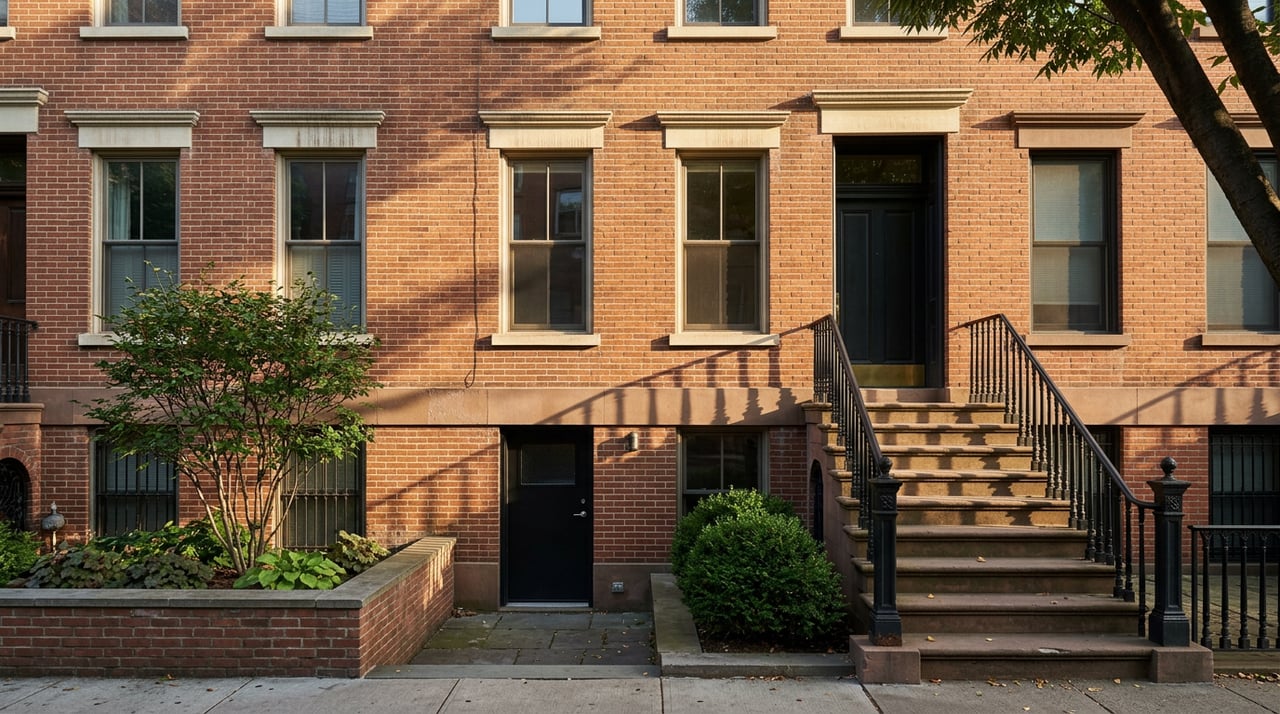
None of these numbers are wrong. They're just each counting a different stack of transactions, and the stack you should care about depends entirely on what you're shopping for. A two-family brick house on 30th Avenue and a resale condo in a new tower near the N/W line are both "Astoria," and they are not competing for the same buyer or the same price.
Sunnyside's Two Housing Stocks Are Really Two Markets
Sunnyside makes the same point even more sharply, because its housing stock is genuinely split in a way you can see on a map.
At the center of the neighborhood sits Sunnyside Gardens, a National Register Historic District built as one of the first planned communities in the United States. The district covers 55 acres across 17 city blocks, with 563 row houses and 32 co-op buildings arranged around shared garden courts, plus New York City's largest private park, open only to residents who pay dues and contribute labor to maintain it. Because it's landmarked, there has been almost no new construction here in a decade. Ring that district and you hit six-story pre-war buildings converted to co-ops and condos, then a newer wave of boutique condo development along Queens Boulevard and Skillman Avenue.
Those two stocks price completely differently, and it shows up in the co-op-to-condo split alone. As of January 2026, co-op studios in Sunnyside typically started between $250,000 and $400,000, with one-bedrooms running $350,000 to $600,000 and two-bedrooms $450,000 to $800,000. Condos in the same footprint commanded a 20 to 40 percent premium over those co-op prices in the same period.
Layer transaction volume on top of that split and the monthly "median" starts to look almost random. In the three months ending March 2026, Sunnyside's median sale price was $620,000 on 23 homes sold. Two months later, the three months ending May 2026 put the median at $1,000,000, on just 9 homes sold. In the same Q2 2026 window, Sunnyside Gardens specifically recorded a median of only $418,000 across 8 deals. Nine homes, or eight, or twenty-three, is a small enough sample that a single Sunnyside Gardens row house sale or a single new condo closing can swing the reported median by hundreds of thousands of dollars without anything in the underlying market actually changing.
None of this changes what makes the neighborhood work day to day. Pub Row along Queens Boulevard still runs seven blocks of bars, beer gardens, and craft breweries. Mama's Empanadas and Alpha Donuts anchor the food scene, Baruir's is still the coffee stop, and Thalia Spanish Theatre keeps staging musicals a few blocks from Flux Factory's warehouse gallery space in neighboring Long Island City. Search interest in Sunnyside jumped 43.7% from 2024 to 2025, and its median asking price rose from $429,088 to $475,000 over that same period, a 10.7% increase, according to a StreetEasy report covered by QNS in January 2026. That's a real trend. The month-to-month median sale price swings are something else: a sampling artifact, not a market signal.
Ridgewood's Number Depends on Which Building You're Comparing
Ridgewood carries the clearest version of this problem, because its two building types aren't just different vintages of the same thing. They're different asset classes entirely.
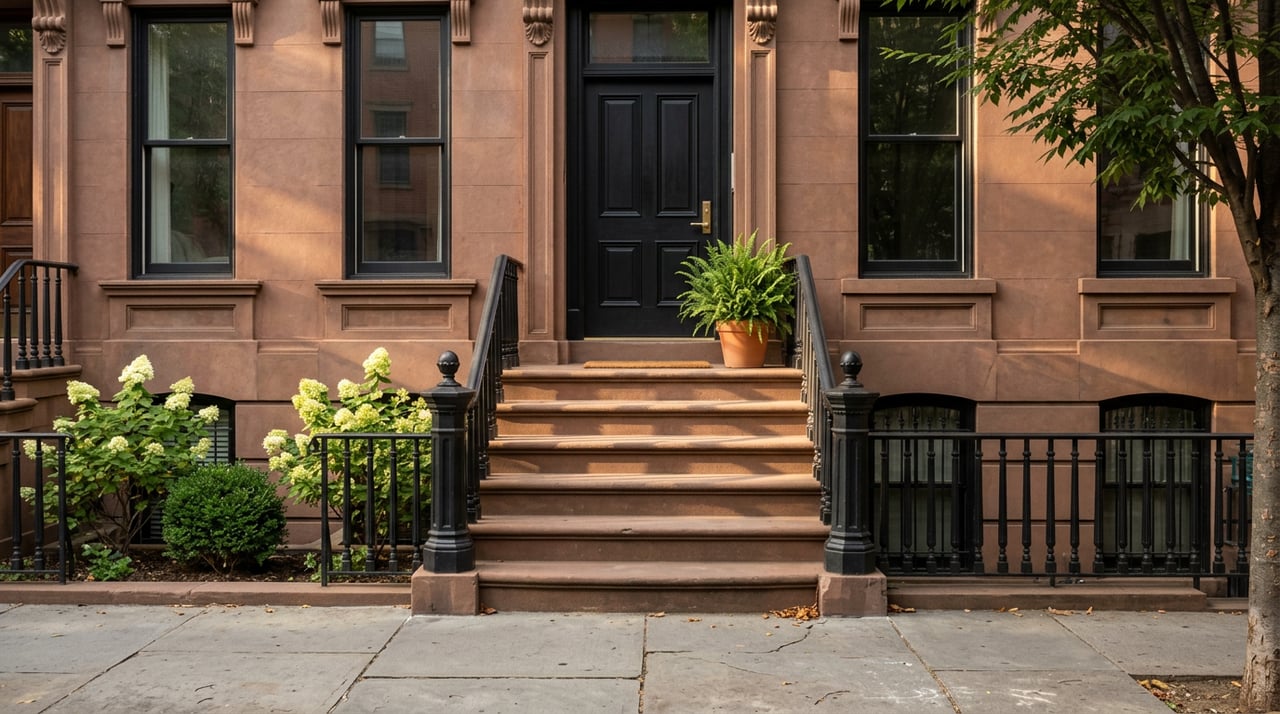
One side of Ridgewood is protected rowhouse stock: the Ridgewood North and Ridgewood South historic districts, designated by the NYC Landmarks Preservation Commission, built by the G.X. Mathews Company as model tenements with larger rooms, improved sanitary systems, and cast-stone detailing that set them apart from typical tenement construction elsewhere in the borough. Resale activity in this stock is what shows up in a September 2025 PropertyShark report putting Ridgewood's condo median at $502,000, down 19.6% year over year, and its co-op median at $655,000.
The other side is a very active multi-family and mixed-use investment market, much of it new construction. As of a mid-2026 MLS snapshot, there were 33 multi-family homes listed in Ridgewood at a median asking price of $1.5 million. Individual listings tell the story at street level: a four-family building on Jefferson Avenue asking $2.5 million, a two-family on Starr Street on the Ridgewood-Bushwick border asking $1.5 million, brand-new all-brick three-family construction advertised on quiet residential blocks. When enough of these sales land in the same reporting window, they pull the neighborhood-wide median sharply upward. Redfin's Ridgewood page put the January 2026 median sale price at $1.3 million, up 6.0% year over year, on just 15 homes sold, the same count as the year before, with days on market nearly doubling from 39 to 78.
That's the mechanism in one line: the same 15 transactions that produced a $655,000 co-op median in one report produced a $1.3 million neighborhood median in another, because one counted resale apartments and the other counted a month heavy with multi-family and mixed-use closings. Ridgewood dropped from first to eighth on StreetEasy's list of hottest 2026 neighborhoods despite a 43.4% jump in search volume, and it was the only neighborhood in that top ten to see asking rents fall, down 1.4% year over year from $3,251 to $3,205. The neighborhood is not cooling. The number you're reading is just counting something different than it was the last time you looked. On Seneca Avenue, Milk & Pull and the decades-old Rudy's Pastry Shop, open continuously since 1934, sit within walking distance of Norma's Corner Shoppe, Taqueria Kermes, and Tasty's Diner, all served by the M train on the Myrtle Avenue line and the L train a few blocks over.
What to Actually Ask Before You Compare These Three
If you're deciding among Astoria, Sunnyside, and Ridgewood, the question that matters isn't "which one is cheaper." It's "what is this specific number counting." Before you put weight on a median price you find online, ask whether it reflects a condo, a co-op, or a multi-family building, since those three property types can carry prices hundreds of thousands of dollars apart in the same zip code. Ask what sub-area or boundary the source is using, since Old Astoria and South Astoria are treated as separate markets by some data providers and lumped together by others. And ask how many transactions the median is built on, since a monthly figure based on eight or nine sales in Sunnyside Gardens tells you far less than a quarterly figure built on thirty.
A neighborhood-level median is a starting point, not a verdict. The number that actually matters is the one built from the specific property type, on the specific blocks, that match what you're trying to buy.
Frequently Asked Questions
Why did Ridgewood's median jump from around $650,000 to $1.3 million? The lower figure reflects condo and co-op resale activity from a September 2025 report. The $1.3 million figure, from Redfin's January 2026 data, reflects a month where multi-family and investment-grade sales made up a larger share of the 15 transactions counted. Both numbers are accurate. They're describing different parts of the same market.
Is Astoria actually more expensive than Sunnyside or Ridgewood? It depends which sub-area and property type you compare. Old Astoria's price per square foot of $1,105 in Q2 2026 is well above Sunnyside Gardens' co-op pricing, but South Astoria's $767 per square foot in the same quarter is close to what Ridgewood's condo resale stock was running. There is no single "Astoria price" to measure against a single "Sunnyside price."
How many home sales actually go into these medians? Fewer than you'd expect. Sunnyside Gardens' Q2 2026 median came from 8 recorded deals. Ridgewood's January 2026 median came from 15. Astoria's South and Old sub-areas recorded 26 and 32 deals respectively in the same quarter. At that sample size, a handful of unusual sales, high or low, can move the reported median by a meaningful margin without reflecting a real shift in the neighborhood.
Comparing three neighborhoods this closely tied together, and this differently counted, is exactly the kind of decision that benefits from someone who tracks the transactions behind the headline number, not just the headline itself. If you're weighing Astoria, Sunnyside, or Ridgewood against each other, Yadlynd Cherubin and The Legacy Team can walk through what the current listings in each actually represent before you commit to a number that may not mean what it looks like it means. Schedule a free consultation to start with the building type and the block, not the median.