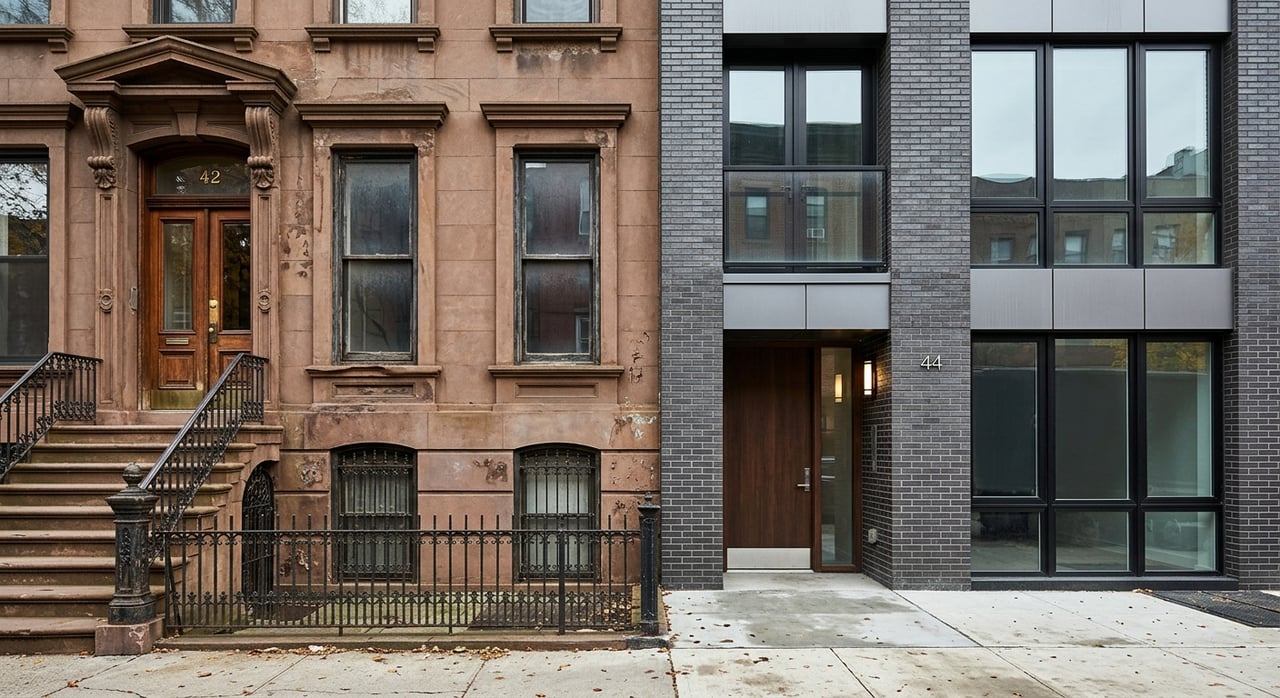
If you are trying to choose between a Brooklyn brownstone and a new condo, you are really deciding how you want to live day to day. Some buyers want historic detail, more direct control, and a house-like routine. Others want simpler upkeep, shared amenities, and a more building-centered lifestyle. This guide will help you compare both options in practical terms so you can move forward with more clarity. Let’s dive in.
Brooklyn housing styles at a glance
In Brooklyn, brownstones are commonly rowhouses, which means they are attached homes that share side walls. According to the NYC Landmarks Preservation Commission Rowhouse Manual, rowhouses are the dominant housing type in many of the city’s historic districts, including well-known Brooklyn areas such as Park Slope, Brooklyn Heights, Carroll Gardens, Boerum Hill, Fort Greene, Clinton Hill, Bedford-Stuyvesant, Greenpoint, Prospect Heights, Sunset Park, and Bay Ridge.
A condo is different because it is an ownership structure, not just a building style. With a condo, you own your individual unit and also share an undivided interest in common areas and facilities. The U.S. Department of Housing and Urban Development notes that condo projects are also shaped by association governance, legal standing, insurance, finances, title, and physical condition.
What daily life feels like
Brownstone living feels more house-like
A brownstone often appeals to buyers who want a home that feels more independent. Even though it is attached to neighboring homes, your day-to-day experience may feel closer to townhouse living than apartment living.
You may also have more direct control over your space and upkeep decisions. That can be a major plus if you value privacy, architectural character, and the feeling of maintaining a property that is distinctly your own.
Condo living feels more shared
Condo living is usually more communal and building-focused. HUD describes condo ownership as including common elements such as roofs, stairways, lobbies, halls, floors, parking, and other shared facilities.
That setup can make life simpler in some ways. Shared systems and common spaces are often maintained through the association, which may be attractive if you want less hands-on responsibility for building upkeep.
Character versus convenience
Why buyers love brownstones
For many Brooklyn buyers, the biggest draw of a brownstone is character. These homes are closely tied to the borough’s historic streetscapes, and they often deliver the stoop, façade details, and house-like layout that people picture when they imagine classic Brooklyn living.
Brownstones can also fit buyers who want a more self-directed lifestyle. If you like having a stronger say in how your home is maintained and used, a rowhouse setup may feel more natural.
Why buyers choose new condos
New condos often attract buyers who prioritize convenience. Depending on the building, you may have access to shared amenities and services, and Freddie Mac’s overview of condo ownership notes that association fees often help cover upkeep of common areas and amenities such as gyms and pools.
That does not mean condo ownership is completely hands-off. It does mean that many maintenance responsibilities are handled at the building level rather than by each unit owner individually.
Maintenance responsibilities are very different
Brownstones require more owner oversight
If you buy a brownstone, you should expect to play a more active role in maintenance. Exterior work can be especially important in Brooklyn’s historic housing stock.
The LPC’s rowhouse guidance explains that owners in historic districts may need approval for certain exterior changes. Items like window or door replacement, masonry cleaning or repointing, and changes to stoops or dormers can trigger review, while ordinary maintenance may be more routine.
Condos shift some upkeep to the building
With a condo, some maintenance is handled through the association or building management. That can reduce the number of issues you manage on your own, especially for shared systems and common spaces.
Still, building condition matters. For example, the NYC Department of Buildings requires façade inspections every five years for buildings taller than six stories, and unsafe conditions must be repaired after filing, as noted in HUD’s condo guidance linked above. In other words, shared responsibility does not remove building risk. It just organizes it differently.
Monthly costs are structured differently
Condo costs often include common charges
When you buy a condo, your monthly housing cost is usually made up of more than just principal and interest. The Consumer Financial Protection Bureau explains that condo, co-op, and HOA dues are usually paid directly and are usually not included in your mortgage payment.
Those dues can range from a few hundred dollars a month to more than $1,000. Freddie Mac also notes that ownership costs can include taxes, insurance, HOA fees, and maintenance beyond the mortgage itself.
Brownstone costs may be less packaged
A brownstone usually does not come with condo-style common charges, but that does not mean ownership is cheaper. Instead, you are more directly responsible for maintenance, repairs, and exterior care.
That cost structure can feel less predictable because expenses may come in waves. A condo owner may pay regular association fees, while a brownstone owner may need to budget for maintenance projects as they arise.
Financing can be more than a unit decision
Condo financing may involve project review
For condo buyers, financing is not always about the unit alone. HUD states that condo project approval can depend on factors such as the project’s legal standing, insurance coverage, financial condition, title, and physical condition.
That means your loan type may affect which buildings are workable options. If you plan to use financing that requires condo project review, it is smart to ask those questions early.
Brownstone financing is more property-specific
Brownstone financing is generally tied more directly to the property itself than to an association’s broader profile. Even so, the condition of the home, needed repairs, and your full ownership responsibilities still matter when you evaluate affordability.
For many buyers, the key question is not just what they can qualify for today. It is whether they are comfortable with the long-term responsibilities that come with owning a house-like property in Brooklyn.
Which option fits your lifestyle?
A brownstone may fit you if you want:
- Historic character and classic Brooklyn architecture
- A more house-like daily routine
- More direct control over your home and exterior
- Comfort with maintenance, repairs, and long-term upkeep
- Readiness to navigate landmark-related review if the property is in a historic district
A new condo may fit you if you want:
- A more convenience-focused ownership experience
- Shared services and possible amenity access
- Less direct responsibility for common-area upkeep
- Comfort with association fees and building rules
- A building-centered lifestyle with shared decision-making
Questions to ask before you choose
Before you decide between a brownstone and a condo in Brooklyn, ask yourself a few practical questions:
- How much maintenance do you want to handle yourself?
- Do you prefer direct control, or are you comfortable with board rules and shared governance?
- If you are considering a historic district property, are you prepared for possible exterior review requirements?
- If you are considering a condo, what do the common charges cover, and how often have they changed?
- Will your financing require condo-project review?
These questions matter because the right choice is not only about style. It is about how you want your budget, time, and responsibilities to work in real life.
The Brooklyn choice is personal
In Brooklyn, both brownstones and new condos can be great options, but they support very different lifestyles. One tends to offer more character, independence, and direct responsibility. The other often offers more convenience, shared upkeep, and structure.
If you are weighing these options and want help matching your goals to the right Brooklyn property type, Yadlynd Cherubin and The Legacy Team can help you think through the tradeoffs with a practical, local lens.
FAQs
What is the difference between a Brooklyn brownstone and a Brooklyn condo?
- A Brooklyn brownstone is typically a rowhouse with a more house-like setup, while a condo is an ownership structure where you own a unit and share ownership of common areas with other owners.
Do Brooklyn brownstones usually require more maintenance than new condos?
- Yes. Brownstone owners are generally more directly responsible for maintenance and exterior upkeep, while condo associations usually handle many common-area responsibilities.
Are condo fees included in a monthly mortgage payment for Brooklyn condos?
- Usually not. The CFPB says condo and HOA dues are typically paid separately and are usually not included in the mortgage payment.
Do historic district rules affect Brooklyn brownstone owners?
- They can. The LPC says certain exterior changes in historic districts may require approval, including some work involving windows, doors, masonry, stoops, and dormers.
Can financing a Brooklyn condo depend on the whole building?
- Yes. HUD notes that condo project approval may depend on factors such as legal standing, insurance, financial condition, title, and physical condition.